By contracting freelancers, renting office space, or making payments for work-related bonuses, many business owners are probably asking the same question during tax season each year: Do I need to file a 1099-NEC or a 1099-MISC?
These two forms are similar in appearance and have similar deadlines; however, they report different types of payments, and using the wrong form can create problems with the IRS and the payment of penalties.
This article covers the details of each form, who must file, which changes will occur in 202,6 and what needs to be done to avoid problems with filing. Businesses can also use a check stub maker to maintain clear and organized payment records when documenting employee or freelancer compensation.
What is Form 1099-NEC?
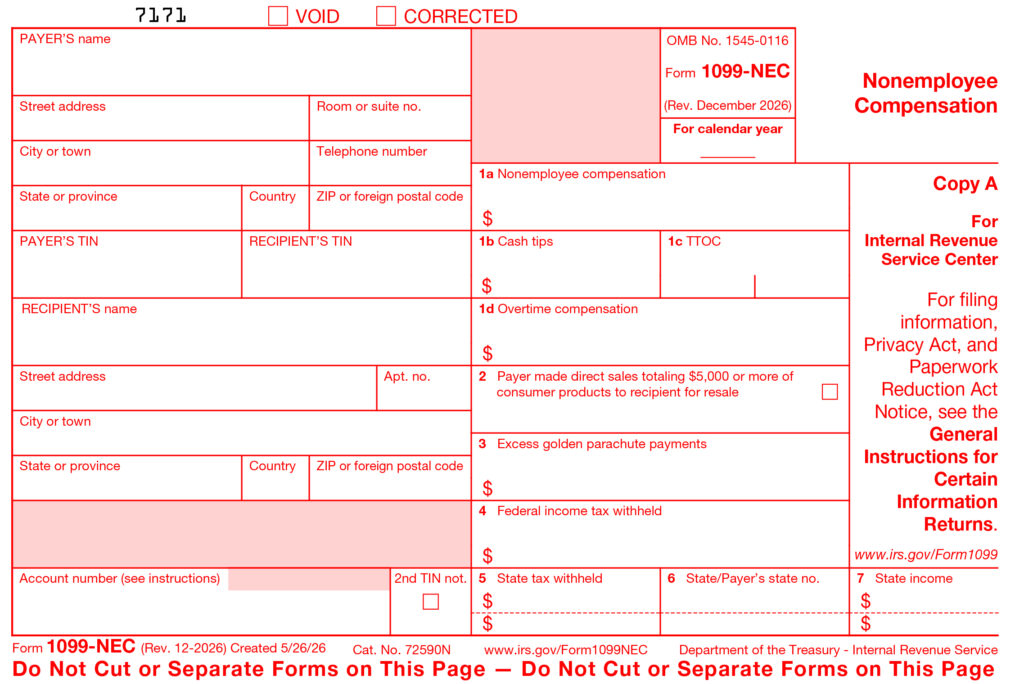
Form 1099-NEC is utilized for reporting financial remittances to independent contractors and freelance workers (persons who are not employees for the services rendered to you).
In case you wish to know what NEC stands for in Form 1099, this is Nonemployee Compensation, and it was developed for the sole purpose of distinguishing contractor payments from other types of miscellaneous income that existed in one box with it.
Prior to 2020, payment for the nonemployee was reported in Box 7 of Form 1099-MISC. In the year 2020, the IRS revived Form 1099-NEC (the form that had not been used since the 1980s) to provide contractor remittances with a unique form and with a unique date for submission.
Payments commonly reported on a 1099-NEC comprise:
- Payments made to freelance designers, writers, developers, or consultants for their services
- Commissions paid to salespeople who are not employees of the company
- Payments for consultation services provided by accountants or lawyers as professionals
- Prizes or awards for services performed independently
- Referral fees
Who Requires Form 1099-NEC?
If all of the following conditions are met, you will need to submit a 1099-NEC. Each of these conditions must be true for you to need to submit the form:
- The person who has received the payment is not an employee of yours.
- You have made the payment while operating in your business and not from your own personal funds.
- You have paid someone who works as an individual or as a partnership for services and not products.
- Your payments to the person or business meet the IRS reporting threshold for the relevant tax year.
- Most payments made to corporations do not qualify for this reporting requirement. Exceptions exist, such as payments made to lawyers and payments made to medical practitioners.
The best practice is to ensure that the contractor completes the W-9 form, ensuring that their taxpayer ID and entity are with you.
What is Form 1099-MISC?
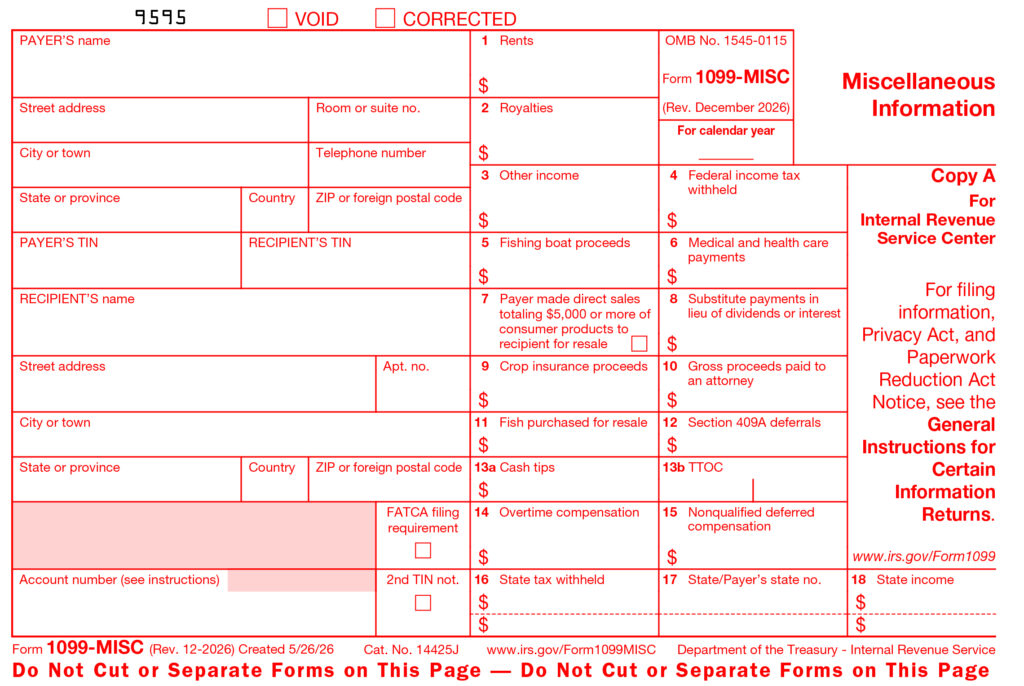
The 1099-MISC form (“Miscellaneous Information”) is the general form used to report other types of payments that do not fall under employee compensation. Following the introduction of a specific form for reporting payments to contractors, the 1099-MISC became specialized in reporting many types of other payments for a wider range of items.
Typical payments made under the 1099-MISC form include the following:
- Rent (Box 1) – for rent, equipment, land, or any workspace
- Royalties (Box 2)
- Prizes and awards not paid as a service reward (Box 3)
- Payments for medical and health services (Box 6)
Payments tied to insurance for crops and fishing activities or niche transactions as admitted under the tax law form.
Who Requires Form 1099-MISC?
Usually, it is necessary to complete a 1099-MISC form if you made any payments in any reportable category (as described above) that meet or exceed the relevant threshold during the year. Most reportable categories have a specific threshold in line with that of 1099-NEC. However, there are some exceptions, such as royalties, which are known for having a lower threshold of $10 historically and which it is likely will remain unchanged as other thresholds will go up.
What is the Difference Between 1099-MISC and 1099-NEC?
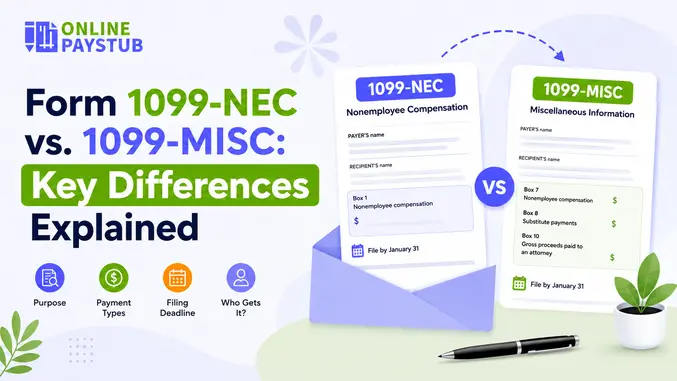
Most people are interested in this question related to “What is the difference between 1099 nec and 1099-MISC?” In one line: 1099-NEC covers what you paid for services provided by someone who is not an employee, while 1099-MISC covers everything else: rent, royalties, prizes not related to services, health care, and so on.
A few other practical differences worth knowing:
| Form 1099-NEC | Form 1099-MISC | |
| Reports | Nonemployee compensation | Rent, royalties, prizes/awards, healthcare payments, etc |
| Common recipients | Independent contractors, consultants, Freelancers | Landlords, healthcare, award recipients, providers |
| IRS & recipient deadline | Typically January 31 | Recipient copies due January 31; IRS paper filing due the end of February |
| Box 7 checkbox | Not applicable | Can indicate direct sales of $5,000+ of consumer products |
Which Form Do You Use?
A straightforward element in decision-making is to identify to whom you are paying the money.
- Are you compensating for work done for your company?- File Form 1099-NEC.
- If the payment is for rent, royalties, legal settlements, non-service rewards, or health care services, then Form 1099-MISC is the correct form.
But can you replace the former form with the latter?
Unfortunately, no; if the payment is for work done by a person who is not your employee, the IRS requires that the payment be filed on IRS Form 1099-NEC. Most mistakenly fill out the 1099-MISC form, which leads to discrepancies between what has been report.
Best Practices for Filing Forms 1099-MISC or 1099-NEC
Here are some best practices that you can follow to file Form 1099-MISC and 1099-NEC.
- When tracking payments, payees should be the basis use, as oppose to payments. The application of a program that automatically sums payments by each payee for the year.
- Request Form W-9 in advance. Ensure that it is sign prior to processing any initial payments to any new contractor or supplier.
- Keep contractor or different client payments separate from regular payments. This will clarify differences between payments that must be report on 1099-NEC and those that can be report on 1099-MISC form.
- Where possible, use electronic filing methods. Electronic filing is mandatory once a certain number of returns are generate.
- Establish a review measure before sending a filing to ensure accuracy. The error detection will prevent further complications.
- Keep in mind the dollar threshold for this filing will most likely change in 2026; therefore, you should adjust your reporting processes.
The Bottom Line
It all boils down to one key question that distinguishes between the categories: Are we talking about payments for services provided by a non-employee, or are we looking at something else entirely?
By answering this question correctly, keeping track of payments made to payees any time in the year, and being ready for the threshold change in 2026, one should have a more relaxed filing season.
FAQs
1) What does NEC stand for on Form 1099?
NEC in Form 1099-NEC stands for Nonemployee Compensation — payments made to non-employees for services.
2) What is the difference between 1099-MISC and 1099-NEC?
1099-NEC reports payments for services performed by non-employees. 1099-MISC reports other types of payments, such as rent, prizes, royalties, and healthcare payments.
3) Can I use 1099-MISC instead of 1099-NEC?
No. Payments for services performed by a non-employee must be report on 1099-NEC, not 1099-MISC.
4) Is a 1099-NEC the same as a 1099-MISC?
No; 1099-NEC and 1099-MISC forms are separate forms reporting different types of payments, though they’re part of the same 1099 series and often filed around the same time of year.
Also Check:
Form W2 vs W4: Understanding the Differences?
What does SDF mean on Pay Stub?
How to Get a Copy of W2 Fast Online?
How to Get Pay Stubs From ADP?